12 May 2026
Legal ComplianceA practical annual compliance roadmap covering ROC filings, meetings, registers, and due-date planning for companies.
Key takeaways
- Keep books, statutory registers, and meeting records aligned all year.
- Annual filings become easier when the finance and secretarial calendars are combined.
- Penalty exposure often starts with small documentation gaps left unresolved.
What annual compliance really includes
Annual compliance is larger than just filing forms with the ROC. It includes board process discipline, financial statement preparation, maintenance of registers, event-based filings, and accurate disclosures.
When records are updated continuously, the year-end filing window feels manageable. When they are ignored, teams end up reconstructing history under deadline pressure.
Why due-date management matters
The biggest operational problem is not always ignorance of the law; it is fragmented ownership. Finance, founders, and consultants often hold different pieces of the process, which creates blind spots.
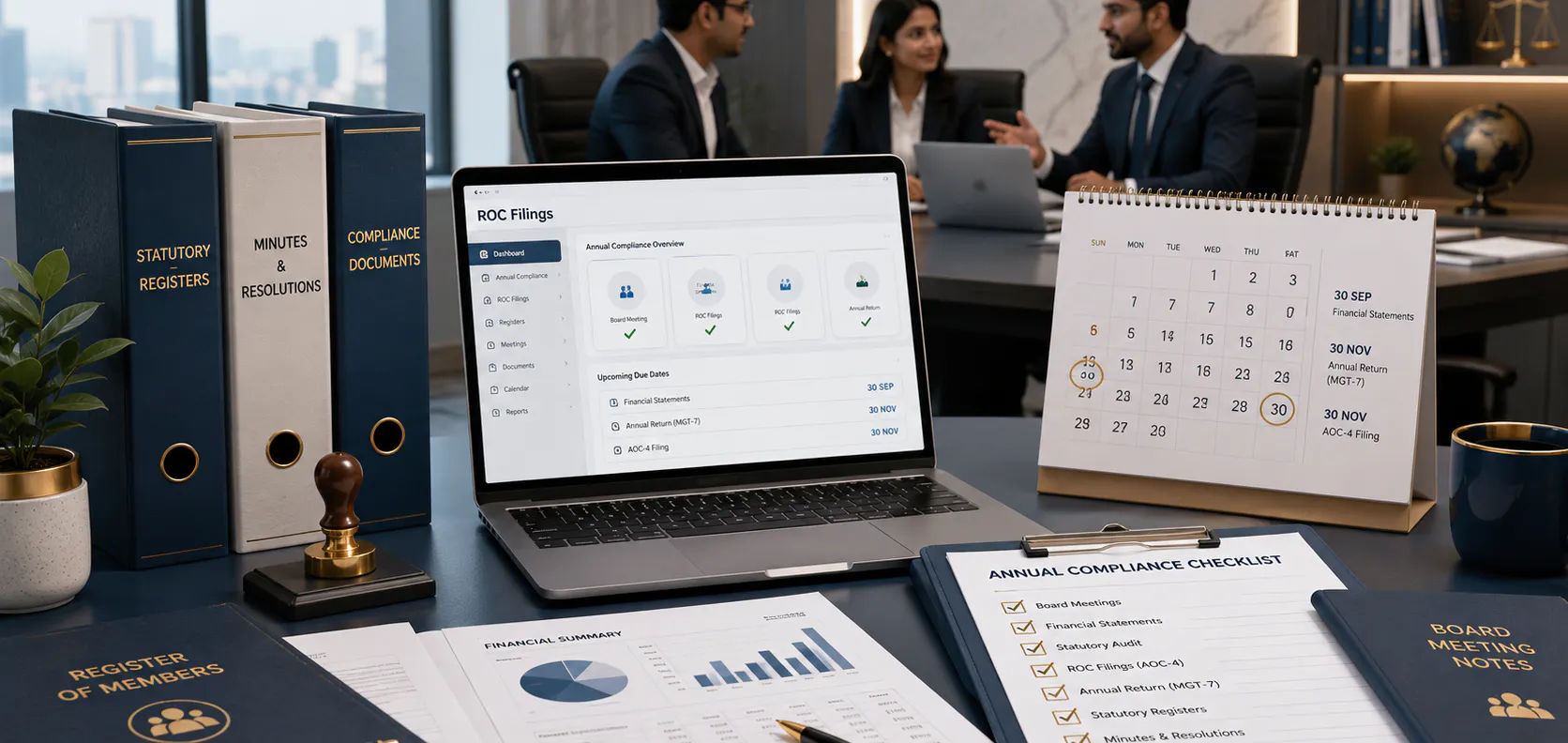
A practical compliance calendar should map meetings, accounts finalization, auditor coordination, and ROC due dates in one place.
A healthy yearly compliance routine
Healthy companies do not treat filing season as an emergency. They maintain version-controlled records, document major decisions properly, and resolve discrepancies before statutory deadlines become tight.
- Update statutory registers and minutes promptly
- Review financial statements early with the accountant
- Confirm auditor details and filing ownership
- Track event-based changes throughout the year